How Much Will a Shopify Website Cost in 2026?: Full Breakdown of Store Setup, Design, and Prices
Creating a Shopify store will be a hassle-free task in 2026. Nevertheless, it may still be hard to learn the actual cost. To this end, one source might set the price at $500, while another might set it at $50,000. A multitude of YouTube videos claim that you can start a business for just $29. […]
 Nov 26, 202510 min read
Creating a Shopify store will be a hassle-free task in 2026. Nevertheless, it may still be hard to learn the actual cost. To this end, one source might set the price at $500, while another might set it at $50,000. A multitude of YouTube videos claim that you can start a business for just $29. The truth is, the price of Shopify is made up of different parts.
What you end up paying depends on how you want your store to look, the complexity of your needs, the size of your business, the apps you want, the level of customization you want, and your growth plans.

This guide breaks everything down clearly, based on real project data, real cost patterns, and real agency experience, so that you can plan your Shopify investment without guesswork. By the end, you’ll know exactly what you should expect to spend in 2026, and why those costs are justified.
Quick Summary of What Does a Shopify Store Cost in 2026?
These costs are influenced mainly by design, apps, and special features, which we’ll explain next. Overall, a typical budget for a Shopify store in 2026 is between $3,500 and $12,000 (₹3L–₹10L).

Component | Cost Range (USD) | Cost Range (INR) |
Shopify Plan | $29–$399/mo | ₹2,100–₹32,000/mo |
Domain | $10–$20/yr | ₹800–₹1,600/yr |
Premium Theme | $150–$400 | ₹12,000–₹32,000 |
Design Customization | $500–$6,000 | ₹40,000–₹5,00,000 |
App Costs | $50–$350/mo | ₹4,000–₹30,000/mo |
Full Store Build | $2,500–$25,000+ | ₹2L–₹20L+ |
Shopify Plus | Starts at $2,500/mo | ₹2L+/mo |
Shopify Pricing Plans in 2026
Picking the right Shopify plan is essential for how well your store performs and how much it will cost you over time. While the platform cost itself is predictable, the features you get, especially around reporting, checkout, and staff accounts, can dramatically influence your business operations.
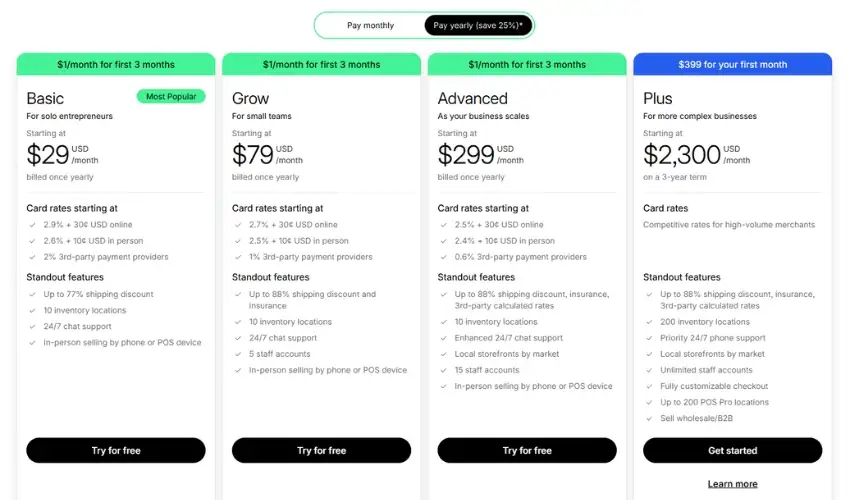
Here’s a clean, simple breakdown to help you choose confidently.
Shopify Basic starts at $29 (annual) / $39 (monthly), which is best for new brands, small catalogs, or side businesses.
Shopify starts at $79 (annual) / $105 (monthly), ideal for growing brands needing stronger analytics and more staff accounts.
Shopify Advanced starts at $299 (annual) / $399 (monthly) and is best for scaling businesses with multi-location needs, advanced reporting, and better internationalization features.
Shopify Website Design Pricing (UI/UX Cost Breakdown)
Design is where your store makes its first impression, and in 2026, customers expect clean, fast, and intuitive digital experiences. Shopify has grown significantly in the last few years, offering more flexibility and customization than ever, but this also means design costs can vary widely depending on your goals. Here’s the real breakdown.
1. Free Shopify Themes ($0)
These Free Shopify Themes are Ideal for small eCommerce stores with short, basic product lists.
Pros:
Quick installation
You don’t have to pay anything at the start
Cons:
Less originality
No extensive design features
2. Premium Shopify Themes ($150–$400)
These Shopify Premium themes are the best, with different sections, transitions, and styles that can be resized for various screen sizes. They are suitable for:
Small and medium-sized enterprises
Start-up direct to consumer
creative companies
3. Custom Theme Design ($1,500–$8,000)
For brands that want complete creative freedom and a unique user experience. Custom design features:
Outstanding website layout
Personalized product page experience
Visual elements that match your brand
More flexibility for future growth
Who Should Choose What?
If you are aiming to run a small business, go for the Premium theme
If you are a growing D2C brand, the Premium + customization should be your first choice
If you are running a product-focused brand, custom sections are ideal for you
If you have a high-ticket brand, go for full custom UX
If you have an enterprise, Shopify Plus + custom theme is your go-to option anytime.
Shopify Store Setup Pricing
While design affects how your store will look, Shopify’s layout determines how it works. This area is often overlooked, but it plays a huge role in how well your store can be checked out, found, handle orders, and provide a good customer experience. A clean layout reduces errors, makes it easier to use, and helps avoid costly fixes later.
Setup includes:
Product listing
Category organization
SEO settings
Menus & navigation
Payment/shipping setup
App installation
Legal pages
Analytics & tracking
Email notifications
If you want to leverage the “Do it by Yourself (DIY) Shopify Store Setup, then you don’t have to spend anything, but you will come across a high learning curve. If you are doing it for fun or have a limited budget, go for it.
In contrast, the expert Setup will cost you $500–$3,000. This is the most preferred route for most founders and serious businesses.
Shopify Development Cost (Custom Features & Advanced Enhancements)
Design and setup determine how your store looks and feels, but development shapes what it can do. In 2026, Shopify brands increasingly rely on custom-coded sections, dynamic product pages, and deeper automation. Here’s what custom development realistically costs this year.
Common Development Features in 2026
Custom product page sections
Subscription processes
Bundle creator
Multi-language support
Enhanced filters and search
Loyalty program connections
CRM/ERP/API links
Development Pricing Details
Features | Cost Range |
Custom Sections | $150- $500 |
Customized PDP | $400- $2,000 |
Bundles | $300- $1,000 |
Subscription/Member Logic | $500- $2,500 |
Wholesale Features | $1,000- $8,000 |
ERP Integration | $1,500- $10,000 |
Cost of Shopify Apps in 2026
At the same time, apps are not just plugins for your Shopify store. They will also help you expand functionality and introduce recurring monthly charges. In 2026, app pricing will be more tiered and usage-driven, enabling realistic budgeting and avoiding unnecessary expenses.
App Category | Typical Cost |
Reviews | Free–$50/mo |
Page Builder | $20–$39/mo |
Email/SMS | $15–$99/mo |
Search & Filters | $15–$59/mo |
Subscription tools | $20–$199/mo |
Most stores spend between $50 to $350/month on applications.
Shopify Maintenance Cost (Monthly or Annual Support)
A Shopify store is not something you launch and forget. From app updates to UX improvements, conversion tweaks, and bug fixes, every growing brand needs consistent upkeep. Maintenance ensures you avoid technical issues before they affect sales.
If you have a small store, then the maintenance cost will fall between $50 to $150
If you have a growing brand, then you have to spend somewhere between $150 to $500
And if you are running a large brand, your store maintenance cost would be $500 to $1500
Shopify Pricing Based on Store Size (2026 Realistic Budgets)
Every business has different goals, product complexities, and design needs. That’s why Shopify pricing varies by scale. Here’s a realistic view of what different types of stores spend in 2026 based on industry benchmarks.
Small Business (10–50 products) => $2,500–$4,000
Growing D2C Brand => $5,000–$15,000
Enterprise Shopify Plus Brand =>$25,000–$100,000+
Region-Wise Shopify Cost (India, US, UK, AUS)
The price for Shopify also changes based on where your development team is based. The cost of workers, agency expertise, and local pricing standards all affect the final amounts.
Region | Cost Range | Why |
India | $1,500–$10,000 | Cost-effective talent |
USA | $5,000–$40,000 | High agency overheads |
UK | $4,000–$25,000 | Skilled but costly talent |
Australia | $4,000–$20,000 | Balanced pricing |
How to Reduce Shopify Store Costs in 2026
Owning a Shopify store doesn’t mean you have to deplete your entire savings. Nonetheless, it can get pricey if you try to do everything at once. In 2026, the most victorious brands are the ones that take measured and gradual steps. They do not over-customize or depend on too many paid tools at the same time; instead, they build a strong base and add features only when the business really needs them.
Start with a premium theme: A good theme cuts down 60–70% of custom design work and gives you a polished look from day one.
Use multipurpose apps: Choose apps that combine multiple features so you avoid stacking five different tools for the same job.
Stay away from unnecessary changes: Only change what directly affects sales or how easy things are to use; save the small adjustments for later.
Develop in stages: Start with the basic features, then add more advanced ones as traffic, sales, and customer information increase.
Improve product content early on: Good quality images, descriptions, and titles can quickly boost sales without adding extra expenses.
Avoid over-engineering your store until it reaches stable sales.
If inventory is the cost you are trying to avoid rather than the build itself, dropshipping removes it entirely — our Shopify dropshipping guide covers how the model works, what margins to expect, and where the hidden costs sit.Before committing to any of these budgets, it helps to run your own numbers through a Shopify profit calculator. Knowing what margin the store needs to deliver tells you which tier of spend is actually justified for your catalogue and order volume.

Select Purpose* Select Purpose*Project InquiryApply for Job
Δ
Final Takeaways
If there’s one thing we’ve learned as an Award-winning Shopify development agency over the years of building Shopify stores, it’s that there’s no “one-price-fits-all” solution when it comes to ecommerce. Every brand has a different story, goals, expectations, and comfort level with technology. Some founders want to launch quickly and keep things simple. Others want a polished, custom experience that reflects their brand personality. And both paths are valid.
So instead of chasing the cheapest or the most premium quote, ask yourself a more practical question: “What kind of store do I truly need at this stage of my business?”
If you don’t know where to put your money and how to maintain the process, we are here for you. As a leading Shopify development company, we have helped companies at all levels and shown them the best way to go, rather than the priciest option.
When you are ready, let’s discuss your brand’s priorities, objectives, and timeline.
FAQ
Is Shopify still worth it for new businesses in 2026?
The answer is as follows: it remains the most straightforward, quickest, and most dependable option, without the need for heavy technical know-how, for new brands.
What’s the minimum realistic budget to start on Shopify?
With a premium theme and basic setup, $2,500–$3,500 is the most practical starting point.
Do I need a developer for Shopify?
Not always. But for professional design, smooth setup, and long-term scaling, a developer adds real value.
Are Shopify apps expensive?
Apps usually cost $10–$50 each, and most brands use 5–10 apps. Budget $50–$350/mo.
Can I migrate/switch my existing website to Shopify?
Yes, most platforms, including WooCommerce, Magento, Wix, and BigCommerce, can be migrated seamlessly.
How long does it take to launch a Shopify store?
The average time for building and launching a Shopify store is if you go with a professional team:
A simple store: 1–2 weeks
A mid-size customized store: 3–6 weeks
A custom store: 6–12 weeks
How much does Shopify Plus cost in 2026?
Shopify Plus starts at $2,500/month, excluding design or development costs.


Leave a Reply